The moon is pretty tonight. I have completed the requisite packing of my belongings into giant suitcases, drank wine and toasted with the neighbors, and now I am completing my evening routine for the final time in Margohovit. I am eager to move on and yet I will miss this place and the meaning it holds for this strange and exciting chapter of my life. One hurdle is complete and I can only imagine what lies ahead for me in this crazy country.
I take a few moments to reflect on the experiences of the past week-a fairly representative anecdotal account of my Armenian experience as a whole:
· The centipede that crawled into the shower with me this morning.
· Getting up early to handwash my clothes in the dark because the power was out, and then hanging them on the line only to get rained on…second rinse cycle.
· My host mother taking a break from chopping peaches to scratch her head with the tip of her knife, the same knife that gets wielded around wildly, pointed at people, used to scratch someone’s leg, and so on…knife safety? Food safety? Bah.
· Walking to Hasmik’s house to find my host father, the village mayor and a Peace Corps vehicle in the intersection by her house. To this day nobody knows what the Peace Corps vehicle was doing there. I asked my host father if it was a PC vehicle. He said yes. I asked why it was here. He and the mayor laughed. I left.
· Cleaning my fingernails after eating sunflower seeds with the neighbors. They are practically the national snack, and if you ask me, more of an event than a food item.
· Listening to 50 cent for the hundredth time….the things you never expected to hear in the Peace Corps.
The list goes on...perhaps I can continue to ennumerate at a later date. For now, suffice it to say that one chapter is closing as another begines. I am ready to start a new life in Armenia and excited about what is in store for me.
Thursday, August 18, 2005


Wednesday, August 10, 2005
PST 12
As I watch Tina dance with her father and her cousin at her birthday party, I am reminded of the things that I love about the Armenian culture: the strong familial bonds, the fierce pride and stubborn dignity, the affection children show for their parents, even as teenagers. It is a vivid reminder of the place I really am, even in the world of degenerate housing meets MTV. The underlying strength of this country rests with its people and I firmly believe that they will achieve success. And that is what we are here to help them do.
In the midst of PST craziness it is easy to forget where I really am and why I am truly here. Right now I am living like an American in an Armenian village. This is PST dictated: hours and hours of classes, session after session on central day, projects, tests, homework and presentations. In order to succeed, we have to rely on American values of multi-tasking, efficiency and priority. But, in order to be successful in Armenia we have to be able to balance this American whirlwind with the slower paced, more social atmosphere of Armenia. Yeah, we’ll have our meeting, but first we’ll have coffee and chocolate and talk about the neighbors. The ability to act like an Armenian in Armenia will help narrow the dichotomy of cultures.
Peace Corps in itself is an experience that will probably never be duplicated or mimicked, that I could never have totally prepared myself for, and will keep me guessing for the next two years. My struggles for the past few weeks, well, 9 weeks to be exact, have taken the form of a rite of passage—one that will continue on with me during my next months and years as a volunteer. It is my sense that the Peace Corps experience contains a number of these rites of passage, one being PST in itself. The training has tested my limits in a number of ways and created growth on many planes. I am sure this is of purposeful design, intended to push the envelope and stimulate reflection and introspection towards two years of service and the commitment that entails.
I have done my share of the former and feel renewed confidence in my abilities and priorities while here. Meanwhile, our group members are dropping like flies: we are now up to four early terminations. All have their reasons; PC wasn’t right for them for one reason or another. Watching members of your group leave is difficult, regardless of the reason and has provided plenty of opportunity to reflect on my own commitment and fortitude.
I have found both to be strong, although tested at times. I am grateful to my host family for opening their home to me and taking good care of me while I am here, but I am ready to move along. It is comforting to know, however, that I am not simply being an oversensitive American—many of the Armenian staff members are in agreement that this is a bit extreme. I was actually rewarded today for being “the most patient trainee with my host family,” by the very Armenian who was there to witness me break down in tears over my stress levels last week. Although my stress came from many different sources, my host family ended up with most of the blame due to the fact that they are where I go at the end of the day. And, at the end of this particular central day, I simply couldn’t face the idea of going home to be on display any longer. The wonderful PST staff helped to temper my family’s interactions with me and I am doing my best to remain patient and enjoy the good aspects of my family for the next week and two days (not that I’m counting).
8-09
Today I am enjoying a tremendous sense of relief after completed both my Community Project and my LPI. They both went well, which was especially surprising regarding the community project. I honestly thought that our village was doomed to failure, or at the very least mediocrity. To my surprise (and relief) it was a smashing success. And, much to my dismay, I actually learned quite a bit and can see the underlying benefit of such a torture device. I hate it when that happens! Because our village is all EE volunteers with the exception of one TEFL (our other TEFL ET’d) we decided to do a follow up on our EE lessons that we had done earlier in the summer. We invited a bunch of kinds (nearly 30 showed up—one of the pleasant surprises of the day) and sent them on a scavenger hunt for trash in the village. We had devised a fairly comprehensive list, including a show, piping, a battery, glass and plastic bottles, tin and aluminum cans, items of clothing, food, cigarettes, etc. The kids were totally into it and nearly raced out of the building. They were only allowed to pick up trash from nature and the streets, and I think they ALL managed to find everything on their list, which was quite a testament to the condition of the streams and streets in the village. When the kids returned we talked about each item they collected and how long it takes to decompose, then hey drew pictures about what they learned and made a big poster.
While this is a fairly simple and common lesson in the US, I think it was groundbreaking here. They just don’t have education about the environment and don’t know any better. The kids really enjoyed the lesson and hopefully they will think about other things they can do with their trash instead of throwing it in the river or the streets. Unfortunately, the only options Margohovit currently has are the river, or burning it. People say there is a “landfill” but we have yet to see such a thing. We have, however, seen (and smelled) lots of piles of burning trash and the piles of garbage on the river banks. We have been told that “it is okay because it goes to Azerbaijan.” Hopefully we can begin to instill some environmental values and knowledge that will eventually lead to action….
My LPI was this afternoon, and I really think it well this time (as opposed to last time where I managed to forget everything, including my sisters name…). I don’t know my score yet, but I think I did nearly as well as I could have, so I am happy. Now we have a few central days of wrap-up, a ceremony for our host families, and it is on to bigger and better things! There are things I will miss about PST, but the for the most part, I am ready to move on.
In the midst of PST craziness it is easy to forget where I really am and why I am truly here. Right now I am living like an American in an Armenian village. This is PST dictated: hours and hours of classes, session after session on central day, projects, tests, homework and presentations. In order to succeed, we have to rely on American values of multi-tasking, efficiency and priority. But, in order to be successful in Armenia we have to be able to balance this American whirlwind with the slower paced, more social atmosphere of Armenia. Yeah, we’ll have our meeting, but first we’ll have coffee and chocolate and talk about the neighbors. The ability to act like an Armenian in Armenia will help narrow the dichotomy of cultures.
Peace Corps in itself is an experience that will probably never be duplicated or mimicked, that I could never have totally prepared myself for, and will keep me guessing for the next two years. My struggles for the past few weeks, well, 9 weeks to be exact, have taken the form of a rite of passage—one that will continue on with me during my next months and years as a volunteer. It is my sense that the Peace Corps experience contains a number of these rites of passage, one being PST in itself. The training has tested my limits in a number of ways and created growth on many planes. I am sure this is of purposeful design, intended to push the envelope and stimulate reflection and introspection towards two years of service and the commitment that entails.
I have done my share of the former and feel renewed confidence in my abilities and priorities while here. Meanwhile, our group members are dropping like flies: we are now up to four early terminations. All have their reasons; PC wasn’t right for them for one reason or another. Watching members of your group leave is difficult, regardless of the reason and has provided plenty of opportunity to reflect on my own commitment and fortitude.
I have found both to be strong, although tested at times. I am grateful to my host family for opening their home to me and taking good care of me while I am here, but I am ready to move along. It is comforting to know, however, that I am not simply being an oversensitive American—many of the Armenian staff members are in agreement that this is a bit extreme. I was actually rewarded today for being “the most patient trainee with my host family,” by the very Armenian who was there to witness me break down in tears over my stress levels last week. Although my stress came from many different sources, my host family ended up with most of the blame due to the fact that they are where I go at the end of the day. And, at the end of this particular central day, I simply couldn’t face the idea of going home to be on display any longer. The wonderful PST staff helped to temper my family’s interactions with me and I am doing my best to remain patient and enjoy the good aspects of my family for the next week and two days (not that I’m counting).
8-09
Today I am enjoying a tremendous sense of relief after completed both my Community Project and my LPI. They both went well, which was especially surprising regarding the community project. I honestly thought that our village was doomed to failure, or at the very least mediocrity. To my surprise (and relief) it was a smashing success. And, much to my dismay, I actually learned quite a bit and can see the underlying benefit of such a torture device. I hate it when that happens! Because our village is all EE volunteers with the exception of one TEFL (our other TEFL ET’d) we decided to do a follow up on our EE lessons that we had done earlier in the summer. We invited a bunch of kinds (nearly 30 showed up—one of the pleasant surprises of the day) and sent them on a scavenger hunt for trash in the village. We had devised a fairly comprehensive list, including a show, piping, a battery, glass and plastic bottles, tin and aluminum cans, items of clothing, food, cigarettes, etc. The kids were totally into it and nearly raced out of the building. They were only allowed to pick up trash from nature and the streets, and I think they ALL managed to find everything on their list, which was quite a testament to the condition of the streams and streets in the village. When the kids returned we talked about each item they collected and how long it takes to decompose, then hey drew pictures about what they learned and made a big poster.
While this is a fairly simple and common lesson in the US, I think it was groundbreaking here. They just don’t have education about the environment and don’t know any better. The kids really enjoyed the lesson and hopefully they will think about other things they can do with their trash instead of throwing it in the river or the streets. Unfortunately, the only options Margohovit currently has are the river, or burning it. People say there is a “landfill” but we have yet to see such a thing. We have, however, seen (and smelled) lots of piles of burning trash and the piles of garbage on the river banks. We have been told that “it is okay because it goes to Azerbaijan.” Hopefully we can begin to instill some environmental values and knowledge that will eventually lead to action….
My LPI was this afternoon, and I really think it well this time (as opposed to last time where I managed to forget everything, including my sisters name…). I don’t know my score yet, but I think I did nearly as well as I could have, so I am happy. Now we have a few central days of wrap-up, a ceremony for our host families, and it is on to bigger and better things! There are things I will miss about PST, but the for the most part, I am ready to move on.
Friday, August 05, 2005
PST 11
I lied, I made it to the internet today instead of next week...enjoy!
I can the whispers before I round the bend…. “Jeeluh, jeeluh” (Jill is coming), and the children momentarily stop all of their important playing on the broken down farm machinery to congregate in front of the wagon. As I come around the corner they are assembled in straight lines, bright smiles on their faces, and in unison “barev jeel, vonts ek?” (hello jill, how are you). I answer that “I am well thanks, and how are you?” To which they take their cue to EACH ask me individually how I am doing. I answer as many of them as I can while I walk and when I am almost out of sight, wave and say goodbye. As this is a daily occurrence, and while endearing, could take my entire day if I were to stick around and greet every child individually, each and every day. It is a small joy in my day to see the children, in an otherwise trying phase of my training and time in Armenia.
It seems that the longer I am here the more often I am reminded that I am here, in a place where nothing can be done simply, easily or quickly, and is often wrought with fraud or at the very least, backwards thinking. That is the thing about this country—it carries a façade of being more developed and forward than it actually is. This is in part due to the fact that it was once a developed nation (with the help of the soviet union). Now with the soviet collapse and the help of a disastrous earthquake, it is a developing nation, with a long way to go. This façade is illustrated beautifully by daily scenes of BMW SUV’s passing pig farmers, the influx of western media to the country and the European feel of the capitol city. Meanwhile, there are villages that remain veritable shanty towns from the earthquake destruction, and there are major social issues that the country is facing. Issues that seemingly don’t belong in this country on the verge of modern civilization and yet are widespread and largely not attended to for one reason or another—mainly financial.
I think the most frustrating thing I am going to encounter is the inability on the part of Armenians to recognize the potential solutions to their problems. They see the need for change but often do not accept a solution unless it is a proven success (which often can’t be proven until it is actually done…). Much of this is due to the Soviet mentality and teaching methods in the schools. People here are used to being given what they need and told how to think. In many ways, although they appreciate their newfound freedom and the idea of democracy, they are still stuck in this mentality. Concepts such as personal responsibility for village streets, trees or trash are virtually non-existent. The people recognize that there is a problem, but don’t identify it as being their problem: it is someone else’e job to fix it. This is a large part of our job as PCV’s--to bring new ideas and then to somehow convince the Armenians to change their thinking long enough to try something new. It is truly a grassroots effort, starting at the village level. This is also what separates PC from other forms of aid and NGO’s that are established in Armenia—the majority of these are concentrated in Yerevan, and although they are doing great work, the people in the villages (who need aid the most) often never see it. Armenia is actually currently the recipient of one of the highest amounts of per capita foreign aid from the US in the world, and is hosting such organizations as USAID, USDA, WWF, Heifer Project, Habitat for Humanity, Unite for Sight, as well as many others from the US, Great Britain, the Netherlands, France, Germany, Norway, Canada and so on. It also receives a large amount of monetary aid from diaspora (mainly people who fled the country during times of persecution and are now permanently living abroad). There are many more Armenian Diaspora than there are people currently living in Armenia. This is exacerbated by the lack of jobs of Armenia—there is also a large number of men who work outside of the country (mostly in Russia, but also the US and Europe for the majority of the year.
We have met representatives from many of these organizations in our endeavors these past eight weeks and have learned quite a bit about what is going on this country. Still, the amount of information coming in right now is obscene, especially with language training on top of it all. I have been studying Armenian for 8 weeks and can actually form complex sentences in past, present perfect, present, future (2 different kinds), imperative and subjunctive conjugations. I am impressed, and overwhelmed. Our first (official) Language Proficiency exam is next week already—this is where all the work for the past two months will be evaluated and recorded for posterity. Yikes!
Last Thursday I got a detailed reminder on the subject of my location. I started my day by receiving a package…without its contents. The Peace Corps was very helpful in the matter, but certainly not very enthusiastic about the possible outcome—I learned why soon enough. The PC logistics coordinator drove me to the post office, where they were very kind and helpful in telling us that we needed to go to the other post office. The other post office was equally kind and helpful in telling us the person we needed was not there, but worked in the main office. By the time we made it to the main office the man that we needed to talk to (who was very busy doing his crossword puzzle) told us that there was nothing he could do…because the package was sent in an envelope. Apparently, according to some strange logic, because it is in an envelope it is a letter, and so it is okay to open it. He is very sorry. But next time, it would be better if it was sent in a box. Note to self. Although this was probably not a huge monetary loss, it was the principle of the matter, combined with the sentimental value of the package that made it very upsetting. Especially when the Armenians shrug their shoulders and say “this happens.” Of course, they also say “not as much as it used to,” which, I guess is comforting…
Add to this the fact that I managed to accidentally delete about 50 songs from my iPod thanks to apple’s ingenious piracy protection, and I can’t get them back until I connect my computer to the internet to register it with iTunes. This is one of those things that sounds a lot easier than it really is. Just hook up to the internet…simple. So, another learning about Armenia: The first time you try to fix a problem and it doesn’t work, you still have hope. The second time, you are frustrated. The third time, downright pissed…”can I get ANYTHING done in this country??” The fourth time, you just shrug your shoulders and ask “why should it be any different this time?” The firfth time…well, I tell you after I ehar back from itunes tech support. I have a strange feeling that this problem won’t be fixed for quite some time. Sigh.
On a lighter note, we just returned from an all EE camping trip to Arpi Leech (Lake) in the Northwest section of the country. For those of you with access to a map it is north of Gyumri and close enough to the border to see both Turkey and Georgia from the tops of the peaks (a short climb form the lake, which is already high in altitude). All in all a nice destination, but truly Armenian in that the scenery was beautiful, but the lake was heavily polluted and there was quite a bit of grazing and misuse of resources. The island in the lake is supposedly a breeding ground for the endangered Dalmatian Pelican, but all we were able to see was a swirling mass of seagulls. A big mass. Regardless, it was a good weekend, and nice to be sleeping outside again under the canopy of stars, which as nothing short of amazing. One type of pollution that doesn’t exist in the majority of Armenia is light pollution, and on clear nights, the skies are mesmerizing. It was also nice to meet the other EE volunteers currently in country and talk about their projects, trials, tribulations and successes.
Actually, we got to bond with them a little too intimately during the obligatory marshrutni adventure. So, just to refresh your memories, marshurtnies are basically minivans, that have been retrofitted with bench seats close enough together to seat 15. They are little longer than our minivans, but certainly not anywhere near as large as a fifteen passenger van. 15 people is already what you might call a bonding experience, especially if anyone is especially large, or hasn’t showered recently (a common problem with riding public marshrutnies….). So, here is today’s quiz: How do you fit 19 people, 19 packs, several tents, a few miscellaneous sleeping bags, a cook stove, a PC water filter (large white bucket like contraption) and a watermelon in one marshrutni? Well, since you asked….you start at the back—4 people sit in the back row and then you pass back as many packs and bag as they can fit under their seat, at their feet, and in their laps. Then you fill the next row, placing a small wooden bench in what used to be the aisle, thus permanently trapping the people in the back row. I got to sit on this small wooden bench with another male volunteer. Fortunately, we were so packed in that the bumping and lurching of the marhsutni resulted in little to no movement of the small bench. Similarly, you pass as many packs and bags into this row as possible. The next row is filled in similar fashion, only there is no small bench for the aisle, so you pile up packs and bags high enough to form a seat. The front row seats as many as possible, and the driver and two more sit in the very front.
Now this, is a clown car. I took pictures, but it just doesn’t do it justice…. The funny thing is, although entertaining, it really doesn’t faze me as much as it probably should. It is simply another part of life in Armenia. Traveling is not simply a means of getting from here to there, it is a complete choose your own adventure novel, replete with suspense, drama, and plot twists.
I can the whispers before I round the bend…. “Jeeluh, jeeluh” (Jill is coming), and the children momentarily stop all of their important playing on the broken down farm machinery to congregate in front of the wagon. As I come around the corner they are assembled in straight lines, bright smiles on their faces, and in unison “barev jeel, vonts ek?” (hello jill, how are you). I answer that “I am well thanks, and how are you?” To which they take their cue to EACH ask me individually how I am doing. I answer as many of them as I can while I walk and when I am almost out of sight, wave and say goodbye. As this is a daily occurrence, and while endearing, could take my entire day if I were to stick around and greet every child individually, each and every day. It is a small joy in my day to see the children, in an otherwise trying phase of my training and time in Armenia.
It seems that the longer I am here the more often I am reminded that I am here, in a place where nothing can be done simply, easily or quickly, and is often wrought with fraud or at the very least, backwards thinking. That is the thing about this country—it carries a façade of being more developed and forward than it actually is. This is in part due to the fact that it was once a developed nation (with the help of the soviet union). Now with the soviet collapse and the help of a disastrous earthquake, it is a developing nation, with a long way to go. This façade is illustrated beautifully by daily scenes of BMW SUV’s passing pig farmers, the influx of western media to the country and the European feel of the capitol city. Meanwhile, there are villages that remain veritable shanty towns from the earthquake destruction, and there are major social issues that the country is facing. Issues that seemingly don’t belong in this country on the verge of modern civilization and yet are widespread and largely not attended to for one reason or another—mainly financial.
I think the most frustrating thing I am going to encounter is the inability on the part of Armenians to recognize the potential solutions to their problems. They see the need for change but often do not accept a solution unless it is a proven success (which often can’t be proven until it is actually done…). Much of this is due to the Soviet mentality and teaching methods in the schools. People here are used to being given what they need and told how to think. In many ways, although they appreciate their newfound freedom and the idea of democracy, they are still stuck in this mentality. Concepts such as personal responsibility for village streets, trees or trash are virtually non-existent. The people recognize that there is a problem, but don’t identify it as being their problem: it is someone else’e job to fix it. This is a large part of our job as PCV’s--to bring new ideas and then to somehow convince the Armenians to change their thinking long enough to try something new. It is truly a grassroots effort, starting at the village level. This is also what separates PC from other forms of aid and NGO’s that are established in Armenia—the majority of these are concentrated in Yerevan, and although they are doing great work, the people in the villages (who need aid the most) often never see it. Armenia is actually currently the recipient of one of the highest amounts of per capita foreign aid from the US in the world, and is hosting such organizations as USAID, USDA, WWF, Heifer Project, Habitat for Humanity, Unite for Sight, as well as many others from the US, Great Britain, the Netherlands, France, Germany, Norway, Canada and so on. It also receives a large amount of monetary aid from diaspora (mainly people who fled the country during times of persecution and are now permanently living abroad). There are many more Armenian Diaspora than there are people currently living in Armenia. This is exacerbated by the lack of jobs of Armenia—there is also a large number of men who work outside of the country (mostly in Russia, but also the US and Europe for the majority of the year.
We have met representatives from many of these organizations in our endeavors these past eight weeks and have learned quite a bit about what is going on this country. Still, the amount of information coming in right now is obscene, especially with language training on top of it all. I have been studying Armenian for 8 weeks and can actually form complex sentences in past, present perfect, present, future (2 different kinds), imperative and subjunctive conjugations. I am impressed, and overwhelmed. Our first (official) Language Proficiency exam is next week already—this is where all the work for the past two months will be evaluated and recorded for posterity. Yikes!
Last Thursday I got a detailed reminder on the subject of my location. I started my day by receiving a package…without its contents. The Peace Corps was very helpful in the matter, but certainly not very enthusiastic about the possible outcome—I learned why soon enough. The PC logistics coordinator drove me to the post office, where they were very kind and helpful in telling us that we needed to go to the other post office. The other post office was equally kind and helpful in telling us the person we needed was not there, but worked in the main office. By the time we made it to the main office the man that we needed to talk to (who was very busy doing his crossword puzzle) told us that there was nothing he could do…because the package was sent in an envelope. Apparently, according to some strange logic, because it is in an envelope it is a letter, and so it is okay to open it. He is very sorry. But next time, it would be better if it was sent in a box. Note to self. Although this was probably not a huge monetary loss, it was the principle of the matter, combined with the sentimental value of the package that made it very upsetting. Especially when the Armenians shrug their shoulders and say “this happens.” Of course, they also say “not as much as it used to,” which, I guess is comforting…
Add to this the fact that I managed to accidentally delete about 50 songs from my iPod thanks to apple’s ingenious piracy protection, and I can’t get them back until I connect my computer to the internet to register it with iTunes. This is one of those things that sounds a lot easier than it really is. Just hook up to the internet…simple. So, another learning about Armenia: The first time you try to fix a problem and it doesn’t work, you still have hope. The second time, you are frustrated. The third time, downright pissed…”can I get ANYTHING done in this country??” The fourth time, you just shrug your shoulders and ask “why should it be any different this time?” The firfth time…well, I tell you after I ehar back from itunes tech support. I have a strange feeling that this problem won’t be fixed for quite some time. Sigh.
On a lighter note, we just returned from an all EE camping trip to Arpi Leech (Lake) in the Northwest section of the country. For those of you with access to a map it is north of Gyumri and close enough to the border to see both Turkey and Georgia from the tops of the peaks (a short climb form the lake, which is already high in altitude). All in all a nice destination, but truly Armenian in that the scenery was beautiful, but the lake was heavily polluted and there was quite a bit of grazing and misuse of resources. The island in the lake is supposedly a breeding ground for the endangered Dalmatian Pelican, but all we were able to see was a swirling mass of seagulls. A big mass. Regardless, it was a good weekend, and nice to be sleeping outside again under the canopy of stars, which as nothing short of amazing. One type of pollution that doesn’t exist in the majority of Armenia is light pollution, and on clear nights, the skies are mesmerizing. It was also nice to meet the other EE volunteers currently in country and talk about their projects, trials, tribulations and successes.
Actually, we got to bond with them a little too intimately during the obligatory marshrutni adventure. So, just to refresh your memories, marshurtnies are basically minivans, that have been retrofitted with bench seats close enough together to seat 15. They are little longer than our minivans, but certainly not anywhere near as large as a fifteen passenger van. 15 people is already what you might call a bonding experience, especially if anyone is especially large, or hasn’t showered recently (a common problem with riding public marshrutnies….). So, here is today’s quiz: How do you fit 19 people, 19 packs, several tents, a few miscellaneous sleeping bags, a cook stove, a PC water filter (large white bucket like contraption) and a watermelon in one marshrutni? Well, since you asked….you start at the back—4 people sit in the back row and then you pass back as many packs and bag as they can fit under their seat, at their feet, and in their laps. Then you fill the next row, placing a small wooden bench in what used to be the aisle, thus permanently trapping the people in the back row. I got to sit on this small wooden bench with another male volunteer. Fortunately, we were so packed in that the bumping and lurching of the marhsutni resulted in little to no movement of the small bench. Similarly, you pass as many packs and bags into this row as possible. The next row is filled in similar fashion, only there is no small bench for the aisle, so you pile up packs and bags high enough to form a seat. The front row seats as many as possible, and the driver and two more sit in the very front.
Now this, is a clown car. I took pictures, but it just doesn’t do it justice…. The funny thing is, although entertaining, it really doesn’t faze me as much as it probably should. It is simply another part of life in Armenia. Traveling is not simply a means of getting from here to there, it is a complete choose your own adventure novel, replete with suspense, drama, and plot twists.
Thursday, August 04, 2005
A not very exciting post
Hello all,
I have managed in my current frenzy to leave the nice long post I recently typed at home. The next time I will be in vanadzor will be next week after community projects and Language proficiency exams are over. I can't wait!!! Less than a week and a half at this point until PST is complete and we move to our new site. Times have been trying, but the end is in sight and I am excited about the prospects of Vayk and the potential to do good work while I am there. Thank you all for all of your support and encouragement along the way--it means a lot. And I promise, I will write you all back when things settle down (If I haven't already).
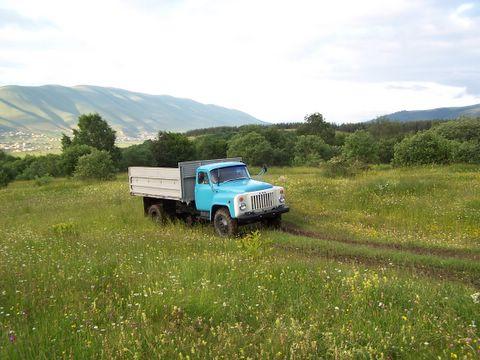
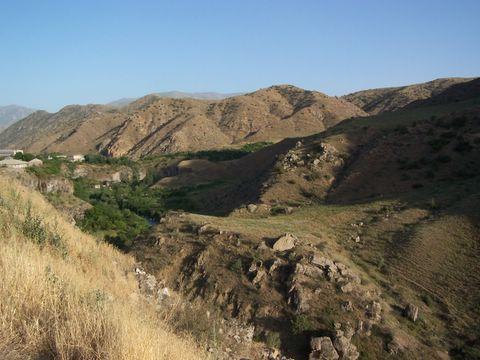
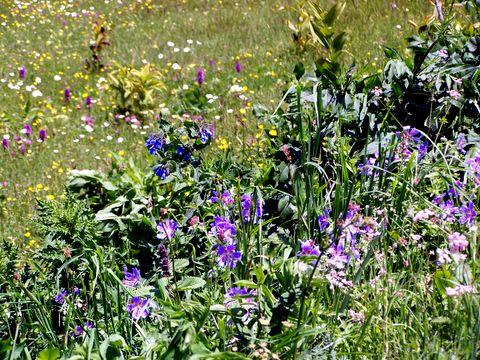
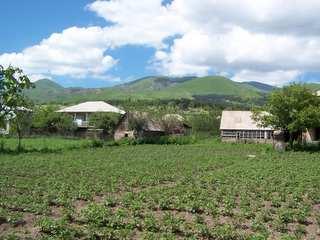
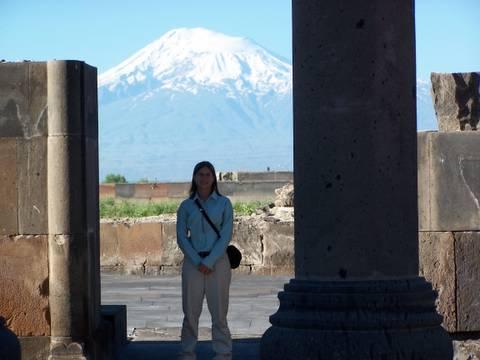
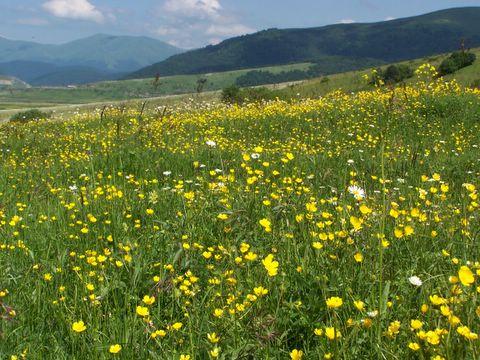
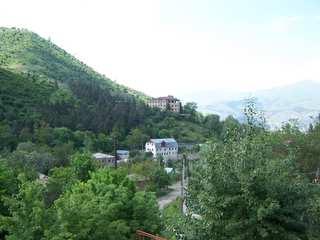
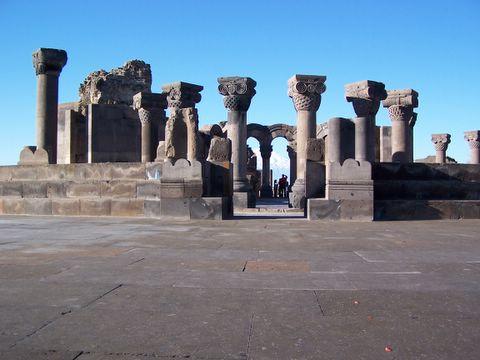
A big thanks to my techno savvy father for posting these lovely pictures of Armenia for you all to see. I am still working on getting the captions right, but basically if it is lush and green it is Margohovit, and if it is desert like, it is Vayk. I will have him post some more pictures later on, but these should give you an idea of where I am right now, at least terms of the nature, which is beautiful! The cities and towns sometimes leave a bit to be desired....
More news to come later. Have a great week!
I have managed in my current frenzy to leave the nice long post I recently typed at home. The next time I will be in vanadzor will be next week after community projects and Language proficiency exams are over. I can't wait!!! Less than a week and a half at this point until PST is complete and we move to our new site. Times have been trying, but the end is in sight and I am excited about the prospects of Vayk and the potential to do good work while I am there. Thank you all for all of your support and encouragement along the way--it means a lot. And I promise, I will write you all back when things settle down (If I haven't already).
A big thanks to my techno savvy father for posting these lovely pictures of Armenia for you all to see. I am still working on getting the captions right, but basically if it is lush and green it is Margohovit, and if it is desert like, it is Vayk. I will have him post some more pictures later on, but these should give you an idea of where I am right now, at least terms of the nature, which is beautiful! The cities and towns sometimes leave a bit to be desired....
More news to come later. Have a great week!
Wednesday, August 03, 2005
Pictures II
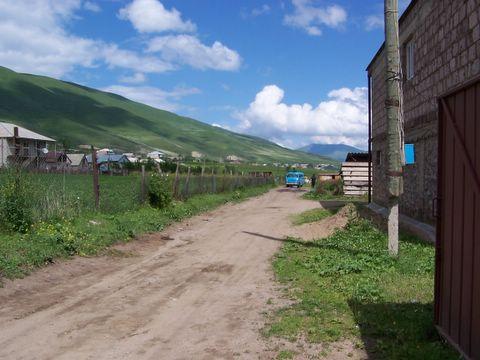
Top: my street in margohovit
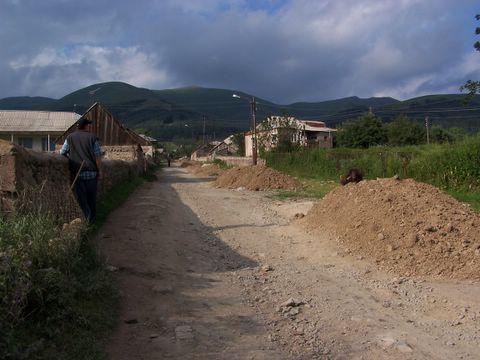
Middle: another street in margohovit--the dirt piles are the way they "fix the roads" Men have been working for weeks to fill in the holes with new dirt, and the first time it rained the streets were full of ruts again....
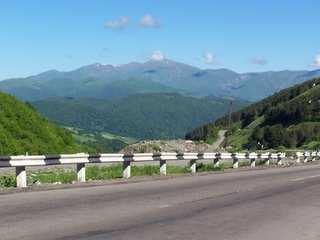
Bottom: One of the main highways on the way from Yerevan to vanadzor
Pictures

Friday, July 29, 2005
PST 10 (I am running out of semi-creative titles)

Times continue to fly and I now find myself beginning week 8 of PST. As I am more than ready for PST to be over, this is a good thing. I am however faced with the fact that our village has yet to complete our community project (or really even make any progress) and, as you may have guessed, it needs to completed before we leave Margohovit. Novel thought, I know. Regardless, as a traditional overachiever, I am stressed about it, and yet there are so many other, seemingly more important things going on, that I still do nothing.
The last two days have enabled me to see more of Armenia via a bird watching trip with the Birds of Armenia NGO and large group field trip to Haghpat Monastery. Armenia is home to more than 2/3 of all of the bird species in the entire former soviet union—something like 300. We were able to quite a few different birds of prey including buzzards, falcons and hawks. Our guide was nothing short of amazing—every time the marshutni broke down (we hardly even notice anymore…) he jumped out of the vehicle and found nests or flying birds of prey. Haghpat was also very cool—it was built in 900 something, and has so much history and culture. Very impressive.
Both trips were very enjoyable and educational, but I am still trying to recover form the marshurtni rides—especially today’s. We traveled by marshrutni convoy today instead of by charter bus, which is our normal mode of transport during large group activities. It is my sense that the act of traveling in a convoy exacerbated the normal driving, shall we say, issues. Allow me to elaborate….
We arrived at the school in Vanadzor this afternoon and piled into 5 or 6 marshurtnies—about 15 people per vehicle. As we pulled out of the school parking lot, the jockeying for position began. Watching the line of white marshrutnies bob and weave through traffic, I was reminded of errant ducklings trying to follow their mother. Sometimes we were two abreast (in one lane), sometimes we were swerving around potholes, sometimes we were facing oncoming traffic, often we were passing on blind curves….but not to worry, the driver honked his horn…its all under control. It was as if we were in a race to get there, both against everyone else and each other. Everyday I amazed that there aren’t more accidents in this country. Especially since seat belts are nearly unheard of and jaywalking is safer than crosswalks. I was in a Peace Corps vehicle the other day (where seatbelts are not only provided, but also mandatory) and we stopped to pick up my Armenian counterpart. She is also required to wear a seatbelt in a PC vehicle, but first we had to teach her how to use it…she kept trying to put her head through it and couldn’t figure out the buckle. Unfortunately, the transportation is a fact of life here, as scary as it may be. Therefore, I have found it best to try and not watch—it is totally out of my control, so its better to just look at the scenery and try not to fall out of my seat when the driver slams on the brakes to avoid hitting the vehicle he is trying to pass on a blind curve with an oncoming truck. They are not all this bad…but this is not an exaggeration of today.
I find myself somewhere in between being totally fed up with my current situation and being excited and thankful to be here. The constant ups and downs don’t help. I find sanctuary with my friends and then I come back home… It is easy to forget why I am here and what my goals of this experience are while I am swamped in work and fighting to keep my status as an adult in the Armenian world. I have hope for my next site, but it too will bring its challenges. I told my host mother yesterday that after 6 months I will be living by myself instead of with a host family, and her response was (while reading the follow statement, please imagine a very high-pitched, incredulous, perhaps even panicked voice) “but Jeel, how will you live? You can’t cook, you can’t make coffee, you can’t bake bread, you can’t make a cake, how will you do it?!?” After restraining myself, I said very calmly (and for the record, for the sixth time or so): “In America, I lived by myself for 5 years. I will be okay.” To which, she responded, “but how did you get your food, can you shopping?” The last part was in English, and word for word…can you shopping? It doesn’t matter how many times I tell them….they still think I am absolutely helpless. And it doesn’t help that they talk to me like I am two years old. I don’t know what to do other than to grin and bear it. Hasmik wants to help, but I don’t even know what she or I can say to them. “You treat me like I am stupid, and really, I’m not, so please stop?” It is cultural, and although I think my particular family is some strange extreme, I don’t think it will go away. I do think that I am going to start telling them that it is rude to read over my shoulder while I am working. Especially when I am typing an email or a blog entry and they are trying to sound out the words, or when they take my notebook away, while I am writing in it, to show the neighbors that I can write in Armenian. And then there was the other day when I made the mistake of wearing my glasses outside of my bedroom. My host brother took them right off my face and put them on, made a bunch of funny noises and then started passing them around the room so other people could look through them. I finally managed to get them back (for those of you who don’t know, I am perfectly blind without them). Then my mother tells me “Jeel, I have. I have (and makes gestures to indicate glasses). I have and Ashot, father have.” What I am supposed to say to that? “Good for you.” “Great, glad to hear it.” “shnorhavor! (Armenian for congratulations)”
As I become more frustrated and more stressed with other obligations and language difficulties, I become more cynical and less able to laugh off some of these things. I laugh about them later with the other volunteers, but when they are happening I simply find myself at a loss for words. Especially of the Armenian kind. I recognize the potential in these situations for learning and teaching, but right now I don’t have the vocabulary or the patience. It is also hard to forgive things that are simply cultural norms here but would be considered quite rude in the US. People are very direct here—to the point of telling you that you are fat, or your language sucks, or you have a pimple on your face. And they like to compare everything to everything and then tell you the results. So and so is a better speaker than you are. Your Armenian is really bad today. She is prettier than that other girl, and so on. After looking through some pictures the other day my host mother told me “American students are all fat but Armenian students are skinny.” I just looked at her blankly (which, she of course interpreted as me not understanding and proceeded to act out being fat), I simply didn’t know how to respond to that and still don’t know if it was a compliment or and insult. The people in the pictures weren’t even fat. Armenian kids are skinny, but the adult population in not especially so. Of course, my host mother has told me, with pride, that “you can only eat a little, but I can eat a lot!” Again, “ummm, good for you?” Maybe?
The other day a few of the volunteers came over to my house to watch the last day of the Tour de France (I am one of the lucky ones in a home with satellite, which means such treats as “Married with Children” dubbed in Russian. It was bad enough in English.) We were only able to find the tour in Italian, which we decided was okay as the alphabet is the same and se we could read the names, etc. My host family, however had other ideas. After commandeering the remote, a friend of the family was able to find a different European sports channel in English. They didn’t seem to understand that it was not the tour, so therefore we didn’t want to watch it. “but its in English—why don’t you wan this one?” After some shouting and much irritation, we convince them to change the channel back to the Italian Tour de France.
Honestly, why? At the same time, I am reminded of how much these people like us and appreciate our being in their country. This, even if they don’t quite understand why we have chosen to come are what we will be doing. My host mother commented the other day after looking pictures of my house that I have sacrificed a lot and she is touched. Thanks to Hasmik for translating that one. I am also reminded that I am lucky to have the facilities that I do in a country with so much variance, and that the cultural exchange I am currently experiencing is part of the PC package. When I read between the lines I know that my host mother telling me that I can’t do anything useful and thus will never survive on my own, is her way of worrying about me and wanting to take care of me. Even so, it is a hell of a way to say such a thing.
Subscribe to:
Posts (Atom)