Wednesday, August 03, 2005

Pictures II


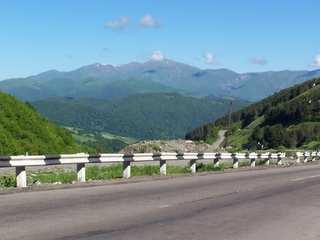
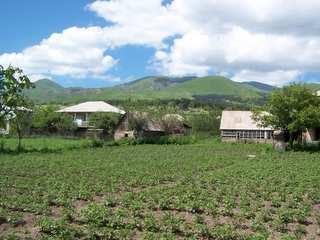
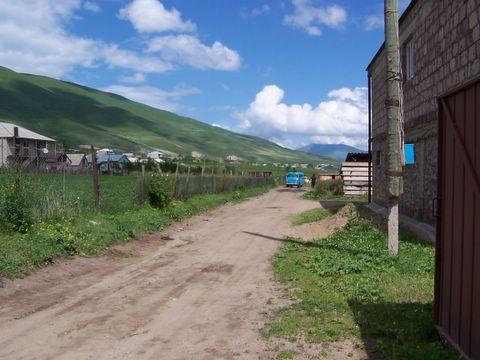
Top: my street in margohovit

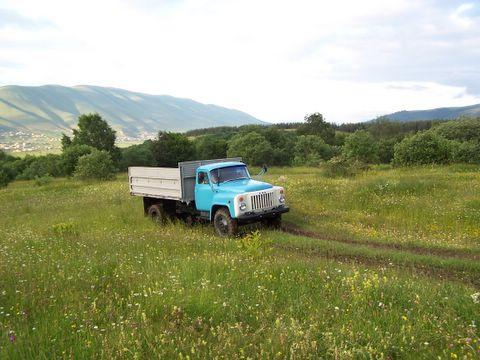
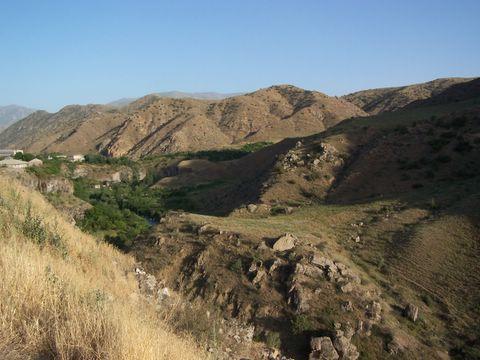
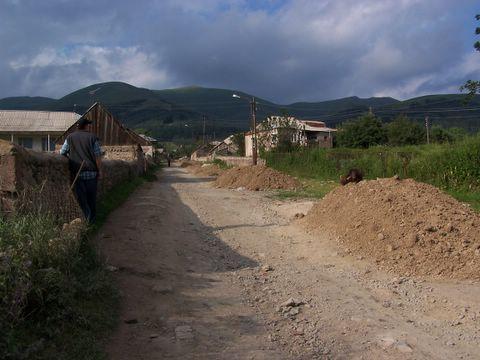
Middle: another street in margohovit--the dirt piles are the way they "fix the roads" Men have been working for weeks to fill in the holes with new dirt, and the first time it rained the streets were full of ruts again....

Bottom: One of the main highways on the way from Yerevan to vanadzor

Pictures


The infamous truck

Welcome
to Vayk

Vayk Mts

Margohovit
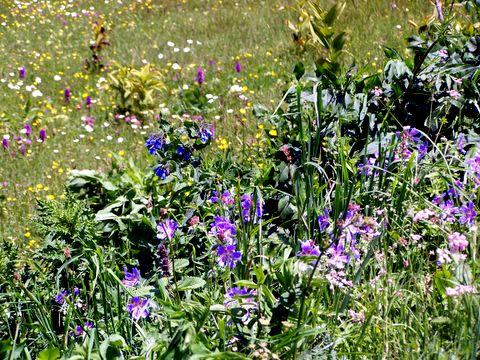
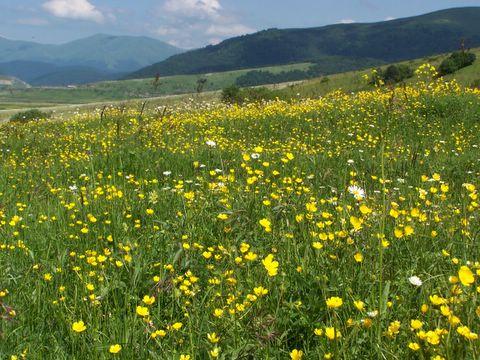
wild flowers
Margohovit village gardens

Historic
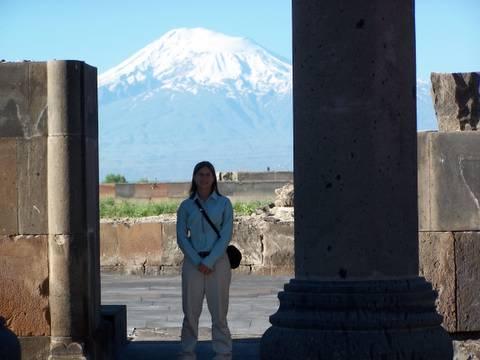
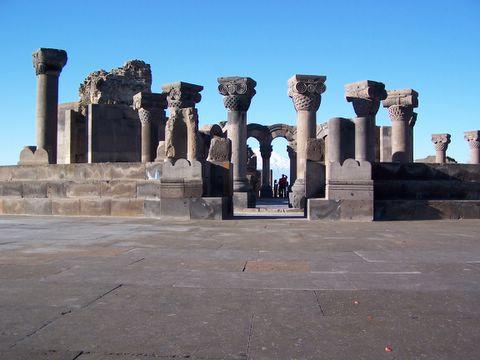
Zvartnots
Temple with
Mt. Ararat
in background

Margohovit wild flowers

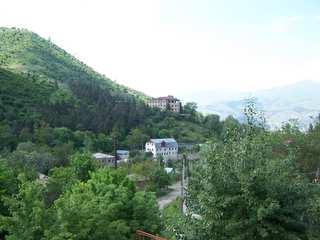
Margohovit
Village

Historic Zvartnots
Temple

Friday, July 29, 2005

PST 10 (I am running out of semi-creative titles)


Times continue to fly and I now find myself beginning week 8 of PST. As I am more than ready for PST to be over, this is a good thing. I am however faced with the fact that our village has yet to complete our community project (or really even make any progress) and, as you may have guessed, it needs to completed before we leave Margohovit. Novel thought, I know. Regardless, as a traditional overachiever, I am stressed about it, and yet there are so many other, seemingly more important things going on, that I still do nothing.

The last two days have enabled me to see more of Armenia via a bird watching trip with the Birds of Armenia NGO and large group field trip to Haghpat Monastery. Armenia is home to more than 2/3 of all of the bird species in the entire former soviet union—something like 300. We were able to quite a few different birds of prey including buzzards, falcons and hawks. Our guide was nothing short of amazing—every time the marshutni broke down (we hardly even notice anymore…) he jumped out of the vehicle and found nests or flying birds of prey. Haghpat was also very cool—it was built in 900 something, and has so much history and culture. Very impressive.

Both trips were very enjoyable and educational, but I am still trying to recover form the marshurtni rides—especially today’s. We traveled by marshrutni convoy today instead of by charter bus, which is our normal mode of transport during large group activities. It is my sense that the act of traveling in a convoy exacerbated the normal driving, shall we say, issues. Allow me to elaborate….

We arrived at the school in Vanadzor this afternoon and piled into 5 or 6 marshurtnies—about 15 people per vehicle. As we pulled out of the school parking lot, the jockeying for position began. Watching the line of white marshrutnies bob and weave through traffic, I was reminded of errant ducklings trying to follow their mother. Sometimes we were two abreast (in one lane), sometimes we were swerving around potholes, sometimes we were facing oncoming traffic, often we were passing on blind curves….but not to worry, the driver honked his horn…its all under control. It was as if we were in a race to get there, both against everyone else and each other. Everyday I amazed that there aren’t more accidents in this country. Especially since seat belts are nearly unheard of and jaywalking is safer than crosswalks. I was in a Peace Corps vehicle the other day (where seatbelts are not only provided, but also mandatory) and we stopped to pick up my Armenian counterpart. She is also required to wear a seatbelt in a PC vehicle, but first we had to teach her how to use it…she kept trying to put her head through it and couldn’t figure out the buckle. Unfortunately, the transportation is a fact of life here, as scary as it may be. Therefore, I have found it best to try and not watch—it is totally out of my control, so its better to just look at the scenery and try not to fall out of my seat when the driver slams on the brakes to avoid hitting the vehicle he is trying to pass on a blind curve with an oncoming truck. They are not all this bad…but this is not an exaggeration of today.

I find myself somewhere in between being totally fed up with my current situation and being excited and thankful to be here. The constant ups and downs don’t help. I find sanctuary with my friends and then I come back home… It is easy to forget why I am here and what my goals of this experience are while I am swamped in work and fighting to keep my status as an adult in the Armenian world. I have hope for my next site, but it too will bring its challenges. I told my host mother yesterday that after 6 months I will be living by myself instead of with a host family, and her response was (while reading the follow statement, please imagine a very high-pitched, incredulous, perhaps even panicked voice) “but Jeel, how will you live? You can’t cook, you can’t make coffee, you can’t bake bread, you can’t make a cake, how will you do it?!?” After restraining myself, I said very calmly (and for the record, for the sixth time or so): “In America, I lived by myself for 5 years. I will be okay.” To which, she responded, “but how did you get your food, can you shopping?” The last part was in English, and word for word…can you shopping? It doesn’t matter how many times I tell them….they still think I am absolutely helpless. And it doesn’t help that they talk to me like I am two years old. I don’t know what to do other than to grin and bear it. Hasmik wants to help, but I don’t even know what she or I can say to them. “You treat me like I am stupid, and really, I’m not, so please stop?” It is cultural, and although I think my particular family is some strange extreme, I don’t think it will go away. I do think that I am going to start telling them that it is rude to read over my shoulder while I am working. Especially when I am typing an email or a blog entry and they are trying to sound out the words, or when they take my notebook away, while I am writing in it, to show the neighbors that I can write in Armenian. And then there was the other day when I made the mistake of wearing my glasses outside of my bedroom. My host brother took them right off my face and put them on, made a bunch of funny noises and then started passing them around the room so other people could look through them. I finally managed to get them back (for those of you who don’t know, I am perfectly blind without them). Then my mother tells me “Jeel, I have. I have (and makes gestures to indicate glasses). I have and Ashot, father have.” What I am supposed to say to that? “Good for you.” “Great, glad to hear it.” “shnorhavor! (Armenian for congratulations)”

As I become more frustrated and more stressed with other obligations and language difficulties, I become more cynical and less able to laugh off some of these things. I laugh about them later with the other volunteers, but when they are happening I simply find myself at a loss for words. Especially of the Armenian kind. I recognize the potential in these situations for learning and teaching, but right now I don’t have the vocabulary or the patience. It is also hard to forgive things that are simply cultural norms here but would be considered quite rude in the US. People are very direct here—to the point of telling you that you are fat, or your language sucks, or you have a pimple on your face. And they like to compare everything to everything and then tell you the results. So and so is a better speaker than you are. Your Armenian is really bad today. She is prettier than that other girl, and so on. After looking through some pictures the other day my host mother told me “American students are all fat but Armenian students are skinny.” I just looked at her blankly (which, she of course interpreted as me not understanding and proceeded to act out being fat), I simply didn’t know how to respond to that and still don’t know if it was a compliment or and insult. The people in the pictures weren’t even fat. Armenian kids are skinny, but the adult population in not especially so. Of course, my host mother has told me, with pride, that “you can only eat a little, but I can eat a lot!” Again, “ummm, good for you?” Maybe?
The other day a few of the volunteers came over to my house to watch the last day of the Tour de France (I am one of the lucky ones in a home with satellite, which means such treats as “Married with Children” dubbed in Russian. It was bad enough in English.) We were only able to find the tour in Italian, which we decided was okay as the alphabet is the same and se we could read the names, etc. My host family, however had other ideas. After commandeering the remote, a friend of the family was able to find a different European sports channel in English. They didn’t seem to understand that it was not the tour, so therefore we didn’t want to watch it. “but its in English—why don’t you wan this one?” After some shouting and much irritation, we convince them to change the channel back to the Italian Tour de France.

Honestly, why? At the same time, I am reminded of how much these people like us and appreciate our being in their country. This, even if they don’t quite understand why we have chosen to come are what we will be doing. My host mother commented the other day after looking pictures of my house that I have sacrificed a lot and she is touched. Thanks to Hasmik for translating that one. I am also reminded that I am lucky to have the facilities that I do in a country with so much variance, and that the cultural exchange I am currently experiencing is part of the PC package. When I read between the lines I know that my host mother telling me that I can’t do anything useful and thus will never survive on my own, is her way of worrying about me and wanting to take care of me. Even so, it is a hell of a way to say such a thing.

Thursday, July 21, 2005

new address--check your email!

I will apologize in advance for the lack of the creative, insightful, and side-splittingly funny entry that you are no doubt searching for right now. Instead, I have another entry full of business. Well, maybe I can slip in a little extra here and there…we will just have to see.

The first order of business is that I have a new address and you can now send me packages if you like. Yay for packages! Unfortunately, I cannot post my new address here—the information is too specific, and thus Peace Corps’ guidelines are prohibitive. Not to worry though, I just sent an email to everyone in my address book with the new info. Please let me know if you have not received the email and would like it—I would be happy to send it your way. We have 4 weeks left of PST, so continue to use my current address for another week and then switch to the new one (July 25 or so, I guess). It is currently taking things 2-3 weeks to get here.

I will however post some guidelines for packages (I know you want to send me something….). This has also been included in my email to all of you.

Send them USPS air mail--the customs fee has been waived for Peace Corps volunteers, all other services have a 20% customs fee
Include a list of package contents
Tape up the box really good (duct tape isn’t a bad idea)--they get pretty banged up on their way here
Don't send any white powder, or like, stuff that will explode...or something

Here are some things that would make me really happy if they just happened to arrive in Armenia in a box with my name on it.....
Peanut Butter!!! Really hard to find and really expensive here.
Pictures of family and friends
Granola bars/clif bars
Kool-aid packets and other drink mixes
crackers/peanuts/dried fruit/other snack items that are semi-healthy
sauce mixes (the powdered kind), taco seasoning, etc.
tuna packets
mints, candy
gummi things (bears, swedish fish, worms...)
markers, colored pencils
nice smelling candles, lotions, etc.
if your feeling really adventurous....DVD's, music,and whatnot. I do have a computer with me to look at files, listen to music and watch movies.
Later on…coffee, I am hoping to get my hands on a French press at some point
Anything else that you think someone living in Armenia might miss about America....

And of course, please don't feel obligated to send a thing. I just thought I would make the process easier for those who are thinking about it. If none of this sounds appealing to you, just send me a letter or an email, I would love to hear from you!

PST 9...maybe, I am losing track

PST is drawing to a rapid close—we are already on week 7. Time is such an amorphous thing here—one day it feels like I just arrived in Armenia yesterday, and the next it feels like I have been here forever. Regardless, I find myself asking where all of the time has gone. I can only hope that things will move along as quickly during the rest of my service. I have learned that too much time to sit and contemplate that realities of life here is a bad thing. There is a delicate balance to strike between productivity and reflection. Right now we are erring on the side of productivity, or at least busyness. Perhaps too much so. Maybe I have said before, that PST has been compared to hazing, and that things will slow down when we arrive at our sites.

For now, my one and only priority is to learn the language, well. I want to be fluent now, but more realistically, I am hoping to be functionally fluent by the end of my first year. It is a realistic goal, but certainly not one that everyone obtains, or even many people obtain. There is very evidently a large range of language abilities amongst volunteers, due to many different factors. I have a good start but need to keep at it. I have had some questions about the intricacies of the language, and so I thought I would enumerate a bit here. If this is something you aren’t interested in please skip ahead!

As you probably are already aware, Armenian has its own alphabet (a very old one), and so we have had to start over in terms of learning how to read and write. I am now sounding out words at about a first grade level I would guess. Well, actually, I am getting better, its just slow. The blessing lies in the fact that the grammar and the structure is fairly easy and in many ways is similar to Spanish. It is a language that uses auxiliary endings instead of prepositions and pronouns. These items exist, but everything is added to the end of a conjugated verb. So, actually in Armenian we have postpositions instead of prepositions. This means that we have to learn how to conjugate the verbs and which ones are irregular, but actually making sentences is easier than I originally thought. It also helps that there is usually not only one way to structure a sentence. So, in English we might say "I am going to the store now" But in Armenian, you could say:now, store I go....................heema khanuta gnumemI go to the store now...........gnumem khanuta heemaI go now to the store...........gnumen heema khanutaAnd it is all correct, and it uses the same three words...those pesky little articles don't really exist...as much. They do, but they are one letter, which is tacked on to the end of a word. In this case, it is the "a" at the end of khanut. What I have written above is a transliteration, or the English letter equivalent of how the Armenian letters sound. For this reason, you can find Armenian words spelled in all sorts of different ways depending on who transliterated it. For instance, the town I will be living in can be Vayk, Vike, or even Vayq.

Another tribulation of Armenian is that there are certain letters that you have to hock lugies to pronounce...kh is one of them (it is one letter, and sounds sort of like making a kh sound in the back of your throat). There is also a gh and a few others. And there are 2 other k's, 2 p's and 2 t's. In each case, one is aspirated and one is not, and in all cases, I can't tell a lick of difference, I just have to memorize how words are spelled. The flip side of this is that in Armenian there are 39 letters in the alphabet, and each makes one (and only one) distinct sound. There are no silent letters, no hard and soft c's, no combinations of letters to sound like something else...it is very straight forward. This is another reason why Armenian words can be spelled so many different ways when we transliterate them…

For the most part the grammar is similar but there are very obvious differences. For instance, Armenian uses a definite article with proper nouns. So we might say “Jill”in a sentence, whereas in Armenian, we would say “the Jill.” Interesting huh? I am such a nerd…thanks for sharing in my geek moment.
Overall, it is an enjoyable language to learn and I am really impressed everyday with how well we are all doing in five weeks of studying. We have covered far more than a year's curriculum in a college level course already. Regardless it is still frustrating, especially when we are expected to be doing productive work in villages where there is little to no English, and part of success includes convincing Armenians to think outside of the Soviet box. The brainwashing is going to be a tough thing to overcome. That, and the traditional lore:

No, drafts won’t make you infertile
I didn’t get sick because I wasn’t wearing socks
Cat hair doesn’t have anything to do with whether or not you will get married
Neither does sitting at the corner of the table
Throwing your trash in the street really is bad for the environment
The river isn’t any better
Even if it goes to Azerbaijan

Well, you get the picture. This a different peace corps experience than, say, Africa, the pacific islands, or some Amazon village. In all cases, it is more developed for the most part and one point was a fairly advanced country. In some cases it has regressed since the Soviet Regime fell, in others it has simply stagnated. In either case, progress was not helped by a massive earthquake that damaged infrastructure during a time of high poverty. More than 15 years later, there are still areas that are uninhabited due to earthquake damage. Armenia’s history is very long and quite fascinating. I will not, however, go into detail here as I am no expert. But, if you are interested, there are resources on the web.

The relatively high level of development is part of what makes it so difficult to be here at times. There is a couple in our group who were in PC in Papua New Guinea a few years ago and they have commented that in some ways it is more difficult to live here than in a country where you have a pit toilet and carry your water from the well. It is because things are close enough to what we are used to remind us of home yet far enough away to remind us that we are definitely not there. It is like everything is just not quite what it should be. I have learned a lot from living in these conditions. Perhaps this poem says it best:

I am learning…
What freedom really is.
How to be myself in a culture that is not my own.
How to suffer silently and with dignity amongst those who do it everyday.
To not take the little things for granted,
And not to neglect the big things that are important.
To live and love with all my strength, no matter what.
To adapt my mindset towards adjustment
And to embrace that which is given to me
Rather than to take and to expect that which is not my own.
Or that which simply cannot be.
And to make the best of whatever becomes
Even when (especially when) this entails discomfort and reevaluation.
I have learned…
That the things I really need, I already have.
And no matter the difficulties and challenges
I have the support of people who believe in me,
Who will enable me to find the tools necessary to succeed
From within myself and those around me,
Rather than to expect these items to be given to me.
Success is my choice.
And my obligation.

As a person who is normally fairly articulate, it is especially trying to not be able to really express myself to those around me. I find writing to be one of the best outlets for this frustration. So, thanks for being my audience, maybe you will see more poetry in the future.
Sunday, July 17, 2005

Vayk, my real site assignment

As promised, I am going to attempt to explain the situation I have found myself in this week. It is strange to be posting entries that happened so far in the past (a week is a really long time) it is like looking at my life from outside of myself. I just returned from a visit to Vayk, my actual permanent site. And I am comfortable in saying that I think I have landed in a good situation. The question is how exactly I got there.

As you are already aware, I was originally assigned to a small called yernjatap, which although wrought with problems and challenges, I had talked myself into going. we arrived in yerevan on Tuesday afternoon to attend a counterpart conference (the people we will be working with directly for the next two years), and then to travel to our sites to visit our new host families, places of employment, etc. I had been told when we were given our site assignments that I didn’t have a host family yet, but wasn’t too concerned because there were several other people in the same boat. We were all told that our program mangers were working hard to fix the situation and we should have host families by the time we arrived in Yerevan on Tuesday. Well, when I arrived in Yerevan on Tuesday my program manager didn’t tell me I had a host family, he told me “we need to talk.” This by the way was happening at 7:00pm, which was the exact same moment that everyone was meeting their counterparts. Only I didn’t have a counterpart....or a host family.

As it turns out, my PM (program manger) had been in yernjatap that afternoon to figure out what was going on and found that they weren’t ready for a volunteer and didn’t have a homestay for me—something that the counterpart were supposed to help ascertain. because of this, he made a last minute decision to move to a new site: Vayk. This, I have learned, has its advantages, although at the time I was feeling pretty discombobulated. I had talked myself into a different site and had started to figure out what the advantages were, etc. Not only that but everyone was having a counterpart conference but me. My counterpart didn’t know I was coming either, and she happened to be in Yerevan that day but had headed back to Vayk before anyone could get a hold of her.

I spent the evening trying to warp my head around my new situation ( as well as catching up on CNN in English and rediscovering that showering can not only be easy but also enjoyable) Gotta love the nice hotel we were staying in. Now I have completely bought into my new arrangement. So, here comes the second description of where I will be for the next two years:

Vayk, unlike Yernjatap, is in the desert portion of the country. It is located in the second to last marz, called Vayadzor, and looks quite a bit like Utah. It is very hot there right now with no humidity, but mornings and nights are breezy and pleasant. I am now going to have invest in a floor fan instead of more wool socks. The winters are still cold, but they only last for 3 months as opposed to six in some other parts of the country, which shall remain nameless. I am told that spring and fall are very pleasant and there are lots of opportunities for hiking and exploring nearby.

I have some very wonderful sitemates, a definite advantage of this new site. They have really taken me under their wing and helped to learn about my town and adjust to the peculiarities of it. At this point they both have their own apartments and it is nice to see that PCV’s can live almost normally in this country. The facilities are a little less than desirably by US standards but I have hopes of eventually enjoying the kind of life (read freedom) that I have been accustomed to. As for my host family, I have had the good fortune of inheriting one of my sitemate’s (James) host family, who seem really really cool. They are very kind, very laid back and didn’t try to force food down my throat once! they have one son who is 15 and also very enjoyable. The father has a great sense of humor and the family doesn’t seem so entrenched in typical Armenian gender roles, which is very refreshing. The son even cooks sometimes! It also helps that James has already broken them—they know what to expect from living with an American, and James knows them very well, so I can ask him questions as needed. I also have some place to go when I have just have enough of Armenian hospitality and lifestyle.

I got to enjoy this a little on my visit this week as well—Renee, James and I made tacos and brownies for dinner one night and hung out listening to music. It felt so normal....finally. So, there is hope, and when I move out on my own there will be even more hope. I am looking forward to that day, but think that I can wait it out with this family. The trade-off in this situation is that I will be enjoying less luxuries, but luxury is less important than a comfortable family to live with. I will remember that as I am flushing the toilet with a bucket....taking a shower with a bucket...and well, thats all with a bucket probably. This family does not have what my current family has in terms of wealth, but they make up for it in other ways.

My counterpart also seems like a great woman to work with. She is a doctor and is also very involved with her town. This includes starting her own NGO, which is now my organization as well. My last assignments also included a school, this will be just an NGO, but I think it will be okay. The NGO is actually more of a youth development type of organization but she wants to start some environmental work and lessons. The biggest challenges I foresee at this point area alack of time on behalf of my doctor counterpart, and what one of the PC staffers calls “mission creep.” I other words, this organization is really spread out and not focused on any one specific thing. regardless, my counterpart (Nune) has lost of ideas and I think is feasible to grab on to one or two of them to begin with and start strengthening the organization and the community,. With time, of course. And better Armenian.

Which, brings me to challenge number 2. James didn’t actually start with this host family, he moved there after two moths at site in a really bad situation with a different family. Therefore, his family (now my family) didn’t meet him until her had studied and spoken the language for almost 5 months. They met me after I have studied and spoken the language for 5 weeks. And they are wondering why I don’t speak as well as James does, who is very good with the language at this point, probably one of the better ones in his group. They don’t understand the differences between the times they met him and me. Time to hit the books even more... chem haskanunem...I don’t understand.

So, there you have it. A purely informational email. I will try to put up a more exciting one soon. Lots of love to all.

PST 7 parties and more parties

The experiences just pile right up, one on top of each other. This entry will be in reverse chronological order, by the way. I am too jazzed up to do it any other way.

I just came home from Armen’s graduation party, or “bye school picnic” if you ask my family. They still insist on speaking to me in broken English instead of Armenian. “jeel, you drink coffee?” To which I say no Armenian….”Jeel, you don’t drink coffee?” The other night, my host mother served me “mis a cheek….” Mis is the Armenian word for meat, and cheek was her attempt on “chicken.” Hav is the Armenian word for chicken, which, by the way, I have known since the second week in country. Sigh. Even now that I know the imperative form, and can properly say “speak Armenian, I understand” they still revert to English if I don’t immediately catch what they are saying…and they speak very fast.

My host mother withstanding, I just had a fantastic evening! When students graduate from school in Armenian they have a big party with their class, teachers, parents and school principal. Since Armen is a graduate, my host mother is a teacher, and my host father is the principal, I attended the party as well. Somehow I ended up sitting with the men (teachers) I think because I came late. The Armenians outdid themselves tonight, I have never had so many men so attentive to me during a meal. My glass was never empty, my plate was always full. I had men cutting bananas and giving me pieces, breaking apricots open and giving me half, filling my plate with food, and all clamoring to toast with me. Fortunately, women tend to toast with wine instead of vodka. There was toast after toast, with students, teachers and principals making speeches, of which I would venture to say, I understood half of the words! Now if only I could understand the connector words to make sentences. I do know that I made it into many of the toasts as a subject, and was told that whenever I am the village they will make sure I am having a good time and am happy.

As with all Armenian parties, there was lots of dancing. I am beginning to develop some rhythm! I danced and danced, and the Armenians just loved it. I was invited to dance to a slow song by one of the graduates, and all eyes in the entire room (along with a video camera and several regular cameras) were on me and this boy, whoever he was. I do my best to entertain, what can I say? I also think that I had my picture taken with every single graduate by the end of the night. People were literally lining up to get their picture taken with me. It is strange to be a celebrity…yesterday Eric, Jenny and I were out and three random people walked up to us and asked if they could take their picture with us. We said yes, and then later…”does anyone know those people?” None of us did… I am getting used to being the center of attention. When I come back to the US I had better be waited on, focused on, and doted on constantly….just get ready!

A few nights ago was Sarah’s birthday and her host family took all of the Americans up into the mountains…in the back of a truck. Like, a flat bed truck, with gates around the outside of the bed, where we stood (and held on tight) as we bounced up the old dirt roads. It is moments like these that I really feel like I am in the Peace Corps. No doubt about it. We arrived at a picnic area and in true Armenian form, had horavats, tomatoes and cucumbers, chocolate, drinks and a beautiful birthday cake. Although we had a great time, the party’s momentum was lost when we all piled back into the truck at 10:30 (in the dark) and it wouldn’t start. Now, this was quite a large truck, and we were pretty far above the village. Not only that, but none of us had really known that we going into the mountains (we thought we were going to the village lake, which is just on the outskirts), and thus were entirely unprepared. Usually I have a headlamp, knife, water, etc, with me. That night I only had my camera and jacket. Lesson learned….worry not.

After many attempts in starting the engine, we thought if we could get the truck rolling then the engine could crank or the driver could pop the clutch. So, we all climbed back out of the truck….and pushed. All 10 of us or so. And pushed, and pushed, and pushed….finally we got the truck over a small incline and on the downhill where we climbed back in and slowly rolled downhill until we came across a car traveling up—straight at us. Did I mention that this was a big truck? With no lights on because the battery was dead at this point? Fortunately the car saw us, and the truck stopped. Somehow I was nominated to go with Jenny, and Armen (Sarah’s host brother, and the truck driver…Armen is a very common name here, and also happens to be my host brother) with the driver of the car down to the village.

The next thing I know I am sitting in the back of this car on a piece of plywood—no back seat, looking at jenny asking “what, exactly, are we doing here?” I was not worried about our safety, Armen is very trustworthy, and happens to be the village taxi driver and so has driven us to Vanadzor many times, we just didn’t know what was going on. I love experiencing incidents such as this in a foreign language…it is just like a bad dream, everything is surreal and nobody can understand each other. We arrived at Armen’s house around midnight, at which point I called Hasmik (my LCF) to A.) figure out what the heck was going on, and B.) have her call our poor host families, who were told that we would be home by 10 or 11, to let them know we were running a little late. Remember…everyone else is still in the mountains at this point. Armen spent a few moments putting his taxi back into working order (people in this country are constantly fixing their cars, they all have to be mechanics) and then took Jenny and me to our homes before going back to the mountains. We assumed that this was to bring back the rest of the volunteers. In the mean time, Jeff and another trainee had walked to Melissa’s house (the closest to the mountains, and quite a walk from where the truck was parked, and gotten Melissa’s host father to drive up to help as well.) He arrives with a car FULL of people, which if you ask me, isn’t too helpful for bringing people home… Armen also drove to the mountain with two more people. So the total number of people stuck on the mountain has just increased by six. Then, as the story goes, all of the Americans piled into Melissa’s host father’s car, only to have him drive 10 feet…and into a ditch. Brad said he was laughing so hard at the situation that he couldn’t speak for a good ten minutes. There were now three vehicles in the mountains: a truck that wouldn’t start, a car in the ditch, and a taxi, which eventually was the means of transport home. The taxi made it to Melissa’s house…and then died. Believe it or not. Anything goes in this country…it is taking a lot to surprise any of us at this point. From here, the volunteers decide to walk, and I think they made it home by 2 am or so.

I tried my best to explain the situation when I arrived home to my host mother and assumed that with Hasmik calling the families that things would be okay. I have now come to learn that Hasmik didn’t tell the families that we stuck in the mountains because she didn’t want them to worry…and despite three separate attempts to explain what happened (even with the aid of my trusty dictionary), I am pretty sure that my family thinks the reason I was late coming home is because I drank too much wine.

This is extremely frustrating for many reasons, and I am to the point where I have to hold myself back to keep from yelling in English…maybe that would help. The families in the village gossip about their volunteers all the time and it won’t be long until the entire village thinks we are all a bunch of drunks. Melissa told me that her mother was asking if I was sick the other day and if my knees hurt. My knees? Yes, I have had a few knee surgeries, but what does Melissa’s mother know about it? Honestly… I have appealed to Hasmik for help on this one, but since the graduation party is a three day event (seriously) my host mother hasn’t been home in the evenings lately.

So now I am faced with a new issue….my family thinks I am a drunk. Great. This is not helped by the fact that alcohol is viewed differently in this country: vodka is normal, a family can go through an entire bottle in one meal. But beer is serious stuff, if you drink beer you are a lush. So, us Americans, who happen to prefer beer to vodka, and are also used to drinking a whole beer, out of the bottle (gasp), are alcoholics. Tonight at the party I got to face the aftermath of all of this. Here I am, toasting happily with all these Armenians who think I am just great, and my host mother decides to pull me aside to tell me that Armenian women don’t drink very much wine (this by the way, is not true). This was after she took away the vodka that was sitting in front of me (it wasn’t mine…it was moved to my seat while I was dancing) and told me that women don’t drink vodka, they drink wine (also, not true). I distinctly remember the fourth of July picnic, where she was filling my cup with vodka repeatedly. Also keep in mind that I am drinking wine out of small shot glass and in the course of the evening—three hours or so—had less than the equivalent of one glass between eating and dancing. I was not drunk, I wasn’t even feeling the effects. I can’t win.
I am really starting to feel comfortable in Armenian and I am enjoying spending time with the people. I am learning a lot and having fun, but I am ready to get out of the host family situation and on my own. My host mother is that person who is loud and pushy and well-meaning but way too in-your-face, even for Armenian standards. It is not only me that gets treated like this, it is everyone. I still have hope for next family, I will update you after next week!